Polymayalgia Rheumatica
🔴 Polymyalgia Rheumatica (PMR)
🔷 Investigations
📌 Typical inflammatory markers
—ESR elevated (usually >40 mm/hr, but can be normal in 5–20%)
—CRP elevated
📌 Full blood count
—Normocytic normochromic anaemia
—Mild thrombocytosis may occur
📌 Liver function tests
—Mildly elevated ALP
—Occasionally mild elevation of ALT/AST
📌 Muscle investigations
—CK normal (important distinguishing feature from inflammatory myopathies)
—EMG normal (not routinely required)
📌 Autoantibodies
—RF negative
—Anti-CCP negative
—ANA usually negative
(Performed mainly to exclude rheumatoid arthritis or connective tissue disease.)
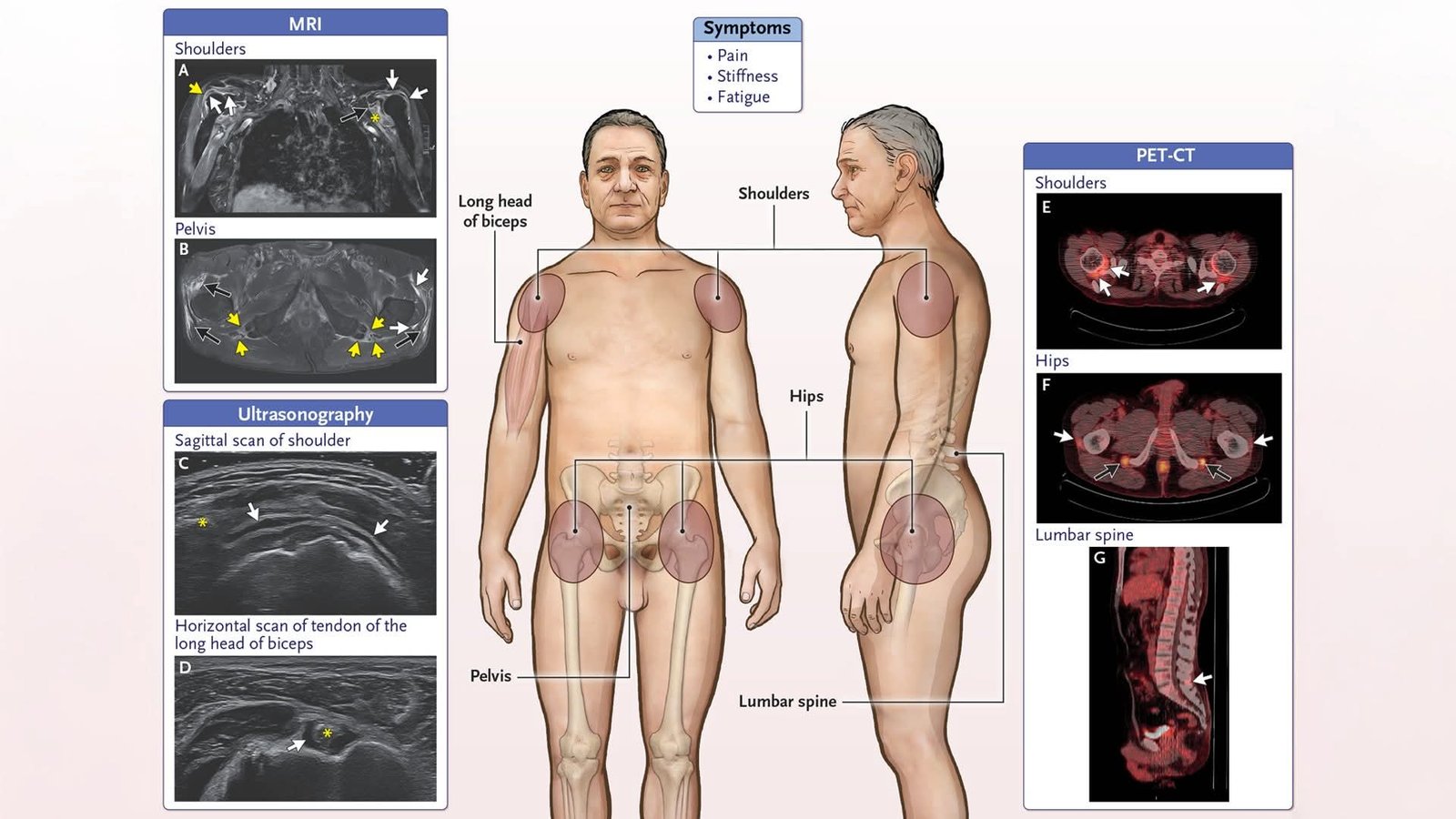
📌 Imaging
🔺 Musculoskeletal ultrasound (recommended by EULAR/ACR)
-Bilateral subacromial-subdeltoid bursitis
-Biceps tenosynovitis
-Glenohumeral synovitis
-Hip synovitis
-Trochanteric bursitis
🔺 MRI if ultrasound is inconclusive
FDG-PET/CT may be useful in atypical cases or suspected large-vessel vasculitis.
📌 Additional tests
- Thyroid function tests (exclude hypothyroidism)
- Vitamin D level
- Renal profile
- Bone profile
- Baseline glucose/HbA1c before corticosteroid therapy
-Baseline DEXA scan in patients at risk of osteoporosis or expected to require prolonged glucocorticoid therapy
🔴 Treatment
A. Rapid response to low-dose prednisolone (12.5–25 mg/day)
B. Relapsing or glucocorticoid-dependent disease
📌 Methotrexate is the preferred steroid-sparing agent
📌 Sarilumab (IL-6 receptor inhibitor) is an option for selected patients with recurrent or glucocorticoid-resistant PMR
Courtesy: MRCP UK
Dr. Muhammad Mosleh Uddin