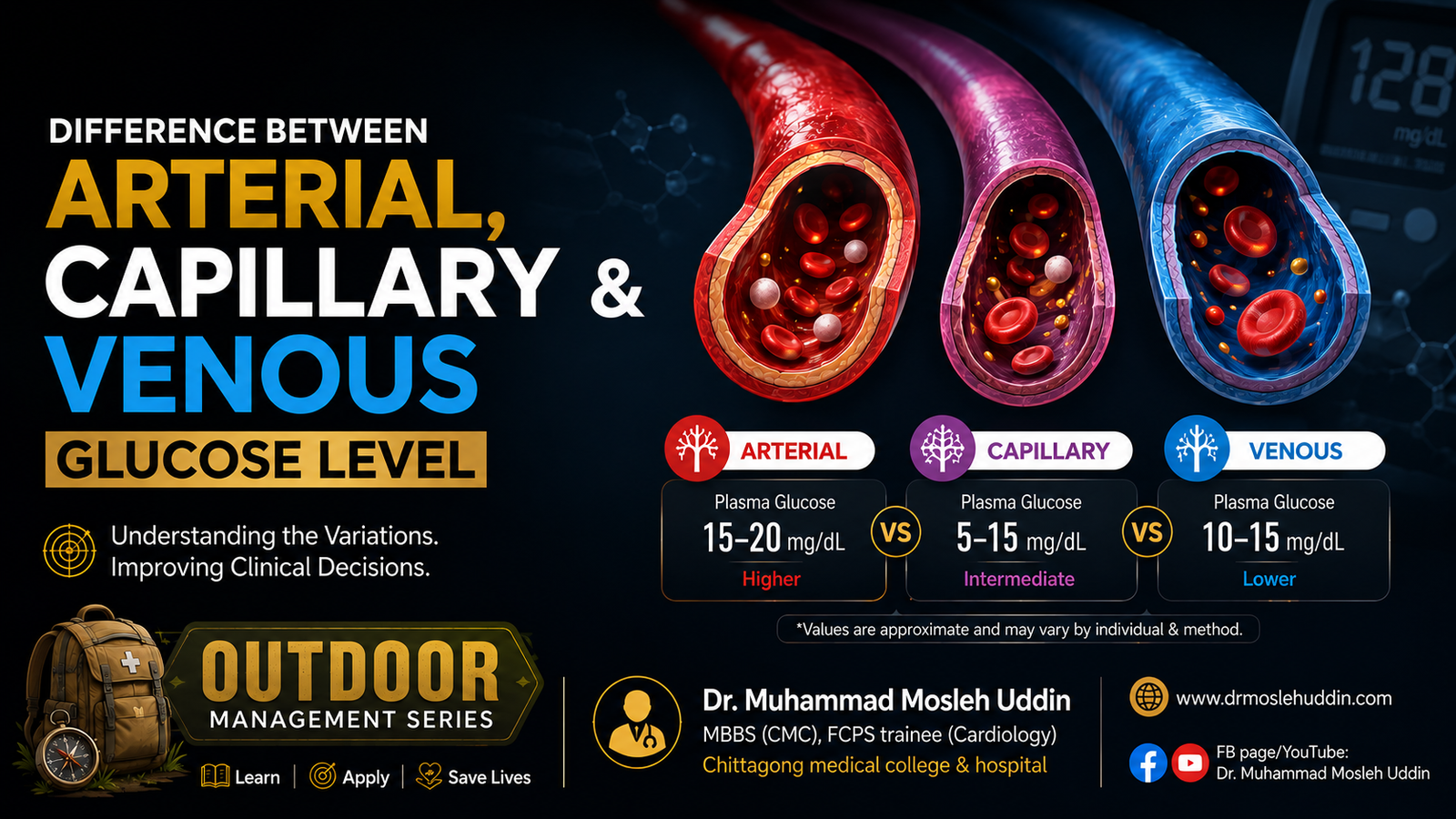
Arterial Vs Capillary Vs Venous glucose level difference
🔴 CBG মাপলেই কি সব হয়ে যায়?
CBG আসলে আমাদেরকে accurate result দেয়না। Accurate glucosr result পাওয়া Venous plasma sample এ। কিন্তু সেটা তো আর বাসায় করা সম্ভন নাহ।
তাহলে কিভাবে CBG মেপে আপনি Venous plasma glucose level assume করতে পারেন সেটাই ইনশা আল্লাহ এখানে লিখার চেষ্টা করেছি আলহামদুলিল্লাহ।
🔴 Arterial glucose level ≈ Capillary glucose level > Venous glucose level
🔴 Why?
Glucose is delivered to tissues from arterial blood, and tissues extract glucose before the blood returns through the veins.
🔴 In fasting conditions:
Capillary glucose is on average 0.3 mmol/L or 5 mg/dL higher than venous glucose in commonly cited data.
🔴 in post-meal conditions:
Capillary glucose becomes significantly higher.
Typically the difference is on average 30 mg/dL (1.7 mmol/L), approximately 20–25% higher than venous glucose.
অর্থাৎ, Fasting condition এ Capillary glucose আর Venous gluose level এ খুব বেশি difference থাকে না।
কিন্তু after meal এই difference টা মোটামুটি significant হয়ে যায়।
📌 In fasting:
Arterial ≈ Capillary > Venous
📌 After meal:
Arterial ≈ Capillary >> Venous
🔴 Practical example:
ধরুন, একজন ডায়াবেটিক পেশেন্ট খাবার ২ ঘণ্টা পর বাসায় Glucometer দিয়ে CBG (capillary blood glucose) check করলো। এবং reading আসলো 12 mmol/L.
কিন্তু সে যদি এটা Lab এ Venous plasma তে measure করতো কত পেতো তাহলে বলুনতো?
12 এর 20 % = 12×(20/100) = 2.4
তারমানে Venous plasma তে আসলে তার value আসতো approximately = 12-2.4 = 9.6 mmol/L
দেখেছেন, তাহলে কতটা vary হতে পারে?
এবার আসেন আরেকটা ব্যপার ক্লিয়ার করি ইনশা আল্লাহ,
🔴 Plasma glucose Vs Blood glucose
Plasma glucose is 10-12% (on average 11%) higher than whole-blood glucose in a person with normal haematocrit.
আমরা একটা formula য় ফেলতে পারি এটাকে, ইনশা আল্লাহ।
🔷 Plasma glucose ≈ Whole-blood glucose × 1.11 .
Conversely:
🔷 Whole-blood glucose ≈ Plasma glucose × 0.90
🔷 Example
If whole-blood glucose = 90 mg/dL
Then approximately:
Plasma glucose ≈ 90 × 1.11 = 100 mg/dL.
But this is only an approximation because hematocrit affects the relationship.
🔴 For diagnosis of diabetes, use Venous plasma glucose level as the standard laboratory measurement.
That means, to diagnose DM,
📌 Standard sample : Plasma
📌 Standard site : Vein
So in prescription you should write,
📌FPG and 2 hrs after 75 g glucose load.
📌যদিও আমরা, FBS লিখি, Lab এ কিন্তু Plasma sample থেকেই mesure করা হয়। তবে ideally FPG (fasting plasma glucose) ই লিখা উচিত।
🔴 Summary
The capillary–venous glucose difference is small in fasting, but becomes substantial after glucose ingestion, because peripheral tissues extract glucose from the blood.
References:
WHO Definition and Diagnosis of Diabetes Mellitus and Intermediate Hyperglycemia; Davidson's Principles & Practice of Medicine; Harrison's Principles of Internal Medicine; NCBI/Clinical Methods; ADA/WHO glucose measurement recommendations.
🎓 Outdoor management series
Dr. Muhammad Mosleh Uddin
FCPS trainee (Cardiology), MBBS (CMC)